
AI in Software Development
AI has been transforming software development in profound and practical ways. During a recent 30-minute talk at Digital Solution Foundry, I shared an overview of where we’re at with AI in coding, some tools and paradigms that are emerging, and how we, as developers, can understand and leverage these evolving capabilities.
Here’s what we covered:
- AI and Software Development
- What Agentic Development Means
- Introduction to the Model Context Protocol (MCP)
- Live Demo
AI-Powered Development Tools
Today’s developers are spoiled for choice when it comes to AI-enhanced tools. Whether you’re writing boilerplate code, critiquing code, or generating tests, AI is finding its way into every dev workflow.
Here are just a few tools to know:
- GitHub Copilot: Needs no introduction at this point.
- Cursor: Offers rich inline suggestions, feels snappy and intuitive.
- Windsurf: Another AI-driven environment built off Visual Studio Code.
- JetBrains AI: Integrated assistant for IntelliJ-based IDEs.
- Zed: Lightweight, with an AI co-dev baked in.
All of these tools offer variations of:
- Autocomplete magic
- Automated boilerplate generation
- Generating tests with almost no mental overhead
Ultimately, AI has the potential of making developers faster and more efficient—turning high-level ideas into runnable code more quickly than ever.
So, What is “Agentic AI”?
“Agentic” AI refers to systems capable of taking initiative and making decisions on their own. You don’t just command them step-by-step — they can autonomously plan and act.
An agentic AI doesn’t just respond; it draws from its internal model, gets context, plans a task, and implements the code — end-to-end.
However, there’s a big caveat.
Agents are only as good as the access and instructions you give them. If the inputs are unclear or the data and scope are limited, you’ll get unclear or incorrect outputs.
Kent Beck calls it his “genie.” You get exactly what you asked for, not what you meant to ask for.
What is the Model Context Protocol (MCP)?
Here’s where things get really interesting.
The Model Context Protocol (MCP) is shaping up to be a powerful paradigm in the AI workflow. MCP allows AI models to talk to tools via structured, documented interfaces.
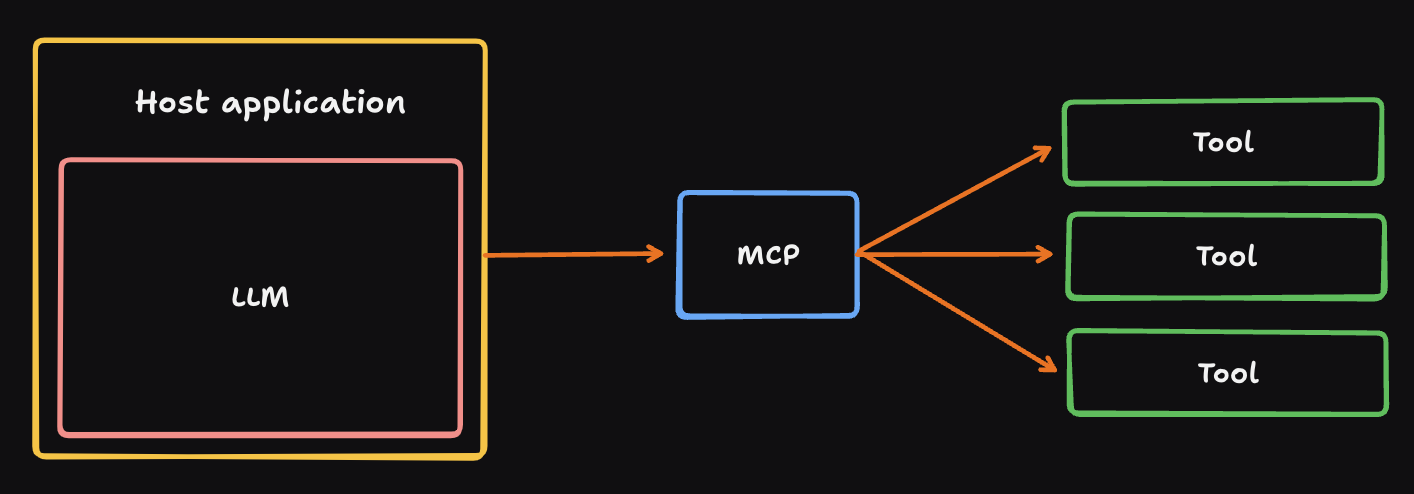
Think of it like plug-and-play for tools + AI. We’re starting to get into the realms of this being our very own Jarvis for Ironman. You can take something like Claude Desktop and connect it to various tools to create a personal assistant that knows about your data and can act on your behalf.
I’m not sure how ready I am for this step to be frank but the thought of being able to talk to an AI that knows my calendar, my mails, my Notion documents… has my nerdy senses tingling. Who knows, maybe my memory is short since it was not that long ago I wrote about leaving Facebook and Google behind.
Docker is doing something pretty interesting here, they are creating a hub for MCPs that allow you to run contanerised versions of these tools. So you can install one for Postgres and/or Graphana and/or GitHub and then chat to your AI about your data in these external apps.
I still want to play around with Notion’s MCP server and see how that pans out. I’m imagining that I can use Claude to add to my notes, summarise them etc. Really keen to see where this all goes.
This isn’t just chat-based prompts anymore. It’s AI with real-world integrations, acting like a personal agent across all your services.
Final thoughts
I really love where this is going so far, it’s really interesting using and playing with all these shiny toys. They are however still in flux. So keep playing, don’t tie into any one service. They are all improving and evolving. Try things out and see where it takes you.